
Lithium Battery Fire Extinguishers: Analysis of Technical Principles and Application Requirements
I. Why are special lithium battery fire extinguishers needed?
With the popularization of electric vehicles, energy storage power stations and consumer electronics, lithium batteries have occupied a core position in the energy structure. Its advantages are high energy density and long cycle life, but once thermal runaway occurs, its fire characteristics are completely different from those of traditional fires.
Firstly, its temperature is extremely high. When lithium batteries are burning, their temperature can exceed 800℃, which is much higher than the ignition points of common combustibility materials such as wood and plastic.
Secondly, the risk of re-ignition is high. The internal reactions of the battery will continuously release energy. Even if the flame is extinguished, the battery cells may still catch fire again.
Moreover, its combustion is usually accompanied by the release of toxic gases, and the decomposition of the electrolyte generates hydrofluoric acid (HF), carbon monoxide, etc., which pose serious hazards to the environment and personnel.
Most traditional fire extinguishers are designed for solid, liquid and gas fires and do not take into account the thermal runaway characteristics of batteries. Therefore, their effectiveness in lithium battery fires is limited. Therefore, lithium battery fire extinguishers were born under such circumstances: they must possess the characteristics of cooling, preventing re-ignition and insulation in order to truly deal with such fires.

II. Mechanism of Lithium Battery Fires
To understand the necessity of fire extinguishers, it is necessary to first identify the root cause of the fire. Lithium battery fires mainly result from thermal runaway:
Trigger factor
Overcharging, overdischarging, external impact or puncture, manufacturing defects (diaphragm rupture, impurities), high-temperature environment.
Reaction process
Internal short circuit → Temperature rise
Electrolyte decomposition → Release of flammable gas
Intense reaction of electrode materials → Intensified heat release
Adjacent battery cells are heated and explode in a chain reaction
Particularity
Self-oxygen supply phenomenon: Even if external oxygen is isolated, the decomposition reaction inside the battery can still maintain combustion.
Thermal diffusion: If one cell in a battery module catches fire, it can easily spread to the entire module.
These characteristics mean that relying solely on suffocation methods (such as carbon dioxide) or surface covering (such as dry powder) cannot completely solve the problem. Only through rapid cooling and chemical suppression can the fire be truly controlled.
III. Limitations of Conventional Fire Extinguishers
Dry powder fire extinguishers: They can quickly put out surface open flames, but they cannot lower the battery temperature, have a high reignition rate, and the residual dust can corrode equipment.
Carbon dioxide fire extinguishers: Suitable for electrical equipment fires, but have limited effectiveness in lithium battery fires. Insufficient cooling effect may cause the fire source to reignite after the gas evaporates.
Water-based fire extinguishers: They have strong cooling capacity, but common water-based fire extinguishing agents have high electrical conductivity, which may cause secondary electric shock risks and are not friendly to precision equipment.
It can be seen from this that traditional fire extinguishers only address the symptoms but not the root cause when dealing with lithium battery fires, which has given rise to the research and development of fire extinguishers specifically designed for lithium batteries.
IV. Technical Features of Lithium Battery Fire Extinguishers
In view of the combustion characteristics of lithium batteries, special fire extinguishing agent formulas are required during the fire extinguishing period of lithium batteries, mainly including:
Water-based composite liquid: By adding flame suppressants and insulating components, it achieves rapid cooling and insulating protection.
Salt solutions: They can form a protective film on the surface of the battery cell, blocking the chain reaction.
Aerosol formulation: It interrupts the combustion chain by suspending particles, but the cooling effect is relatively limited.
Core performance
Cooling: Quickly bring the temperature of the battery cells back to a safe zone to suppress thermal runaway.
Anti-reignition: Form a barrier layer on the battery surface to prevent secondary combustion.
Insulation: The fire extinguishing agent must meet the requirement of being non-conductive and is suitable for scenarios such as electric vehicles and energy storage.
Environmental protection and safety: Avoid fluoride release and reduce harm to personnel and the environment.
International standard requirements
UL9540A: Test Standard for Thermal Runaway of Energy Storage Systems.
EN3-7: Performance Requirements for Portable Fire Extinguishers.
NFPA855: Fire Protection Standard for Energy Storage Facilities.
Many countries also have clear requirements for the electrical insulation performance and toxicity testing of fire extinguishing agents.
V. Typical Application Scenarios of Lithium Battery Fire Extinguishers
1. Electric vehicles: Once the battery compartment of an EV catches fire, it is extremely difficult to put out the fire. Small lithium battery fire extinguishers on vehicles or large devices equipped by fleets can significantly reduce risks.
2. Energy storage power stations: Hundreds of battery cabinets operate in a centralized manner. Once thermal runaway spreads, the consequences will be serious. Lithium battery fire extinguishers can serve as the first line of rapid protection.
3. Battery production and storage: The testing workshop, aging process and finished product warehouse are all high-risk areas and corresponding fire extinguishing equipment must be installed.
4. Consumer electronics and transportation: This includes scenarios such as laptops, mobile phones, drones, and air cargo transportation, where portable lithium battery fire extinguishers are required to be on standby at all times.
VI. How to Choose the Right Lithium Battery Fire Extinguisher
When making purchases, enterprises should focus on examining the following indicators:
The performance of the fire extinguishing agent should be examined to see if it has good insulation and whether it can cool down quickly at high temperatures.
2. Anti-reignition effect: Has it passed UL9540A or equivalent tests? Can it block battery chain reactions?
3. Applicable voltage level: Confirm that it can be safely used in high-voltage battery systems, such as electric vehicle power batteries (hundreds of volts).
4. Certification and testing: Whether it complies with international standards such as NFPA, UL, and EN, and whether it has actual measurement data from third-party laboratories.
5. Safety and environmental protection: Is the fire extinguishing agent non-toxic and harmless to human health? Is it easy to clean after use and does not corrode equipment?
6. Convenience of use, portability, and whether it can be integrated into an automatic fire extinguishing system for vehicles or cabinets.
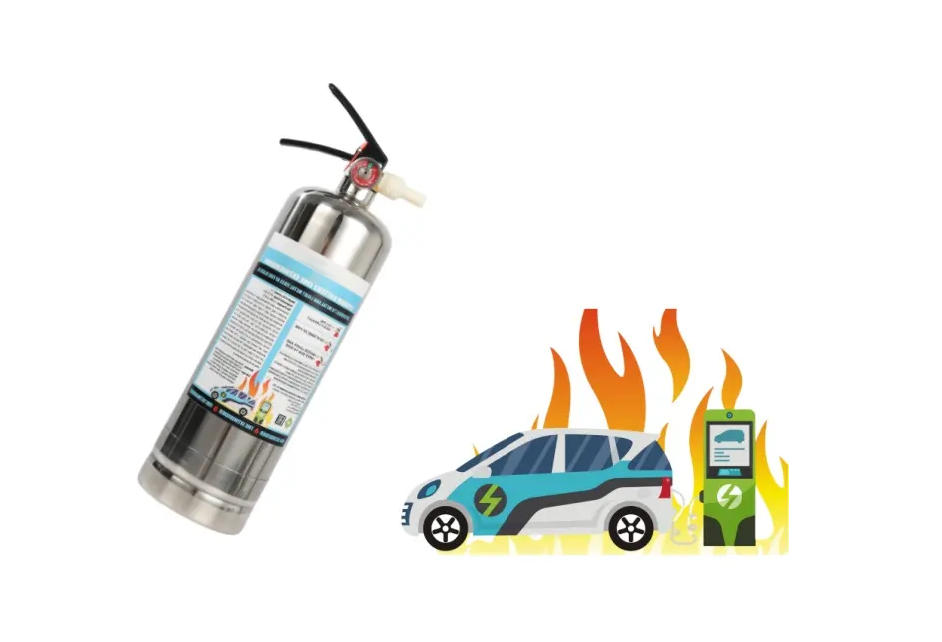
VII. Future Trends
With the development of the new energy industry, lithium battery fire extinguishing technology will present the following directions:
More efficient cooling technology: Enhance heat dissipation speed through nanomaterials or phase change materials.
Intelligent fire extinguishing system: Linked with the battery management system (BMS), it can trigger fire extinguishing in advance.
Environmentally friendly fire extinguishing agents: Reduce fluoride and enhance sustainability.
Modularization and vehicle-mounted application: Adapt to different battery application scenarios and form standardized solutions.
Lithium battery fires are characterized by high temperatures, reignition and toxicity, and ordinary fire extinguishers are not up to the task. The development of lithium battery fire extinguishers is precisely based on this practical demand. It integrates multiple technical features such as cooling, anti-reignition, insulation, and environmental protection, and is becoming an indispensable safety guarantee for the new energy industry.
For both enterprises and individuals, whether it is electric vehicles, energy storage power stations, or battery production and storage, equips with lithium battery fire extinguishers are no longer an option but a necessity. With the continuous advancement of technology, lithium battery fire extinguishing solutions will become more efficient and intelligent, safeguarding the safe development of the new energy industry.


Contact Us
If you have any questions about this Privacy Policy or our practices, please contact us:
Mobile: +86 13975129722
Email: robin@hongdunfire.com
Address: Room 29005, Wanda Building A, Changsha, Hunan, China
Related News
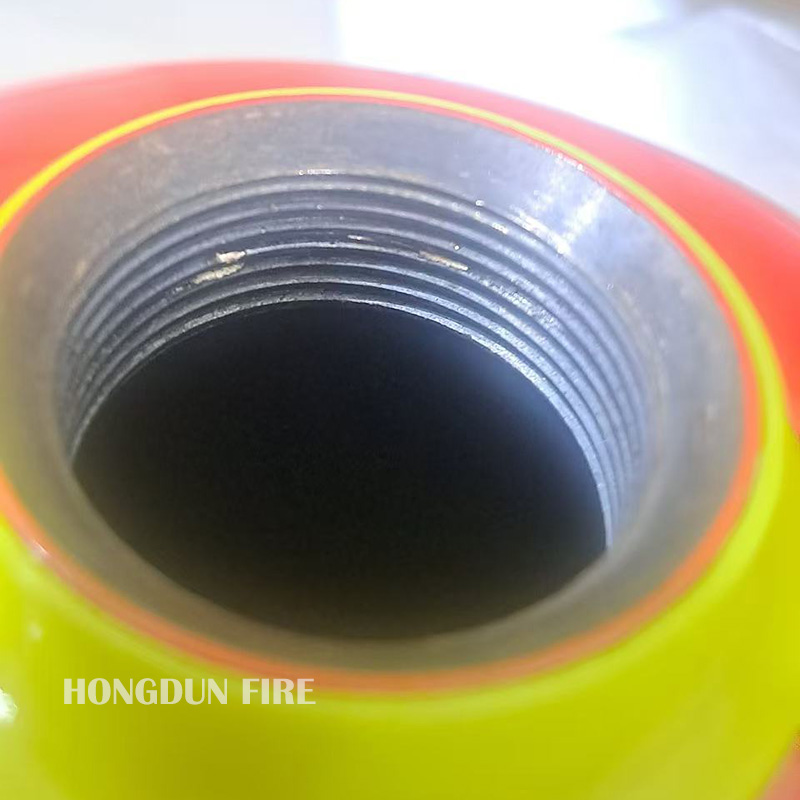
How to Distinguish Manufacturing Defects from Improper Valve Handling
Learn how to identify the real causes of fire extinguisher cylinder neck thread damage. Discover the differences between manufacturing defects, machining issues, transportation factors, and improper valve installation or removal. Includes expert insp

EN3-Certified Fire Extinguishers: Safety Assurance and Technical Analysis Under European Standards
EN3-certified fire extinguishers are at the core of European fire safety standards. This article details the standard system, performance requirements, applicable scenarios, and market value, helping to ensure safety and compliance.

What is the optimal size for a vehicle fire extinguisher?
This article primarily highlights the importance of vehicle fire extinguishers and provides size recommendations for different vehicle models, helping readers better select the appropriate size of car fire extinguisher.

Gas Fire Extinguishers Explained: Principles, Types, and Application Scenarios
Gas fire extinguishers play a key role in data centers, laboratories, power facilities, and other scenarios. This article explains their principles, types, application cases, and selection recommendations.