
How to Distinguish Manufacturing Defects from Improper Valve Handling
Fire Extinguisher Cylinder Thread Damage: How to Distinguish Manufacturing Defects from Improper Valve Handling
For fire extinguisher manufacturers, importers, distributors, and fire protection contractors, one of the most common post-delivery disputes involves damage to the cylinder neck thread. Customers occasionally report chipped, worn, or deformed threads after receiving extinguishers or empty cylinders, raising questions about whether the issue originated during manufacturing, transportation, or subsequent handling.
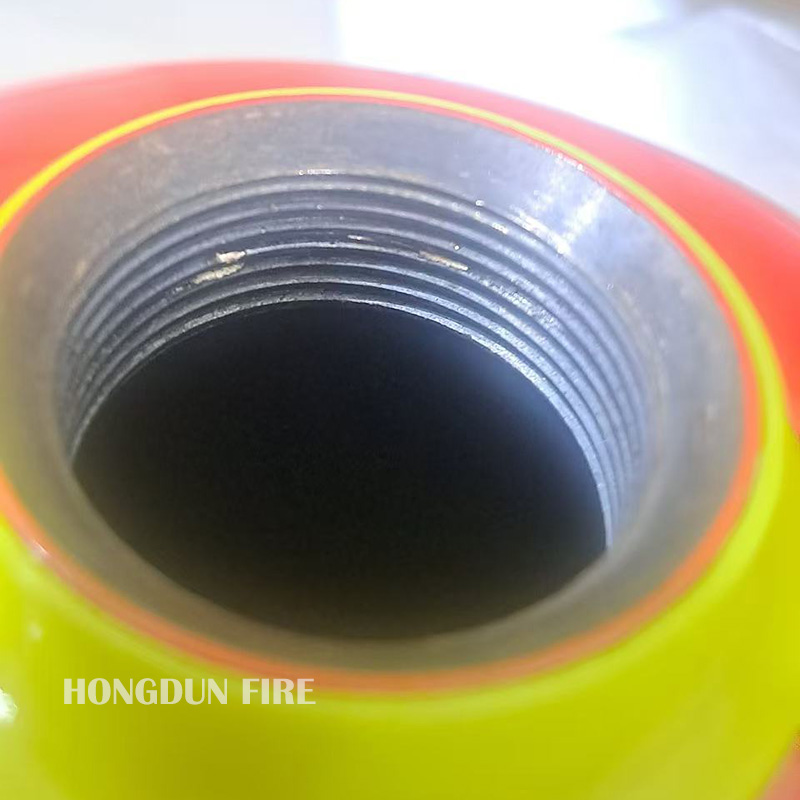
Based on a recent field inspection of an exported fire extinguisher cylinder and a review of the actual thread condition shown in the supplied photo, the evidence strongly suggests that the observed damage was caused by post-delivery valve removal or installation rather than a factory manufacturing defect.
This article explains how industry professionals can accurately determine the root cause of thread damage, avoid unnecessary warranty disputes, and establish objective technical criteria for quality assessments.
Understanding User Search Intent
Professionals searching for information about fire extinguisher thread damage typically have one of the following objectives:
Determine whether thread damage is a manufacturing defect.
Resolve quality disputes between suppliers and customers.
Identify signs of improper valve installation or removal.
Understand acceptance criteria during incoming inspection.
Develop evidence for warranty claims or technical reports.
Improve procurement and quality-control procedures.
This guide addresses each of these concerns using practical industry experience and recognized inspection principles.
Industry Background: Why Thread Integrity Matters
The cylinder neck thread is one of the most critical components of a fire extinguisher. It forms the mechanical connection between the cylinder body and the valve assembly. Any damage to the thread can potentially affect:
Valve sealing performance
Pressure retention capability
Safe servicing and maintenance
Regulatory compliance
Product lifespan
Relevant industry entities and standards include:
EN 3 Fire Extinguisher Standard
CE Certification Requirements
Pressure Equipment Directive (PED)
ISO 9001 Quality Management Systems
Hydrostatic Pressure Testing Procedures
Fire Extinguisher Valve Manufacturers
Cylinder Thread Inspection Gauges
Visual Assessment of the Submitted Thread Damage
Observed Characteristics
Based on the supplied image, the thread profile appears generally intact with localized damage limited to a small number of thread crests.
The following observations are significant:
Damage is concentrated in isolated locations rather than around the full circumference.
The majority of thread turns remain continuous and properly formed.
No visible casting voids or large material deficiencies are present.
No evidence of longitudinal cracking is observed.
The damaged areas exhibit characteristics consistent with mechanical impact or scraping.
These features are inconsistent with typical manufacturing defects and instead indicate localized external force applied after production.
How Manufacturing Defects Typically Appear
1. Casting Defects
If the defect originated during the casting process, inspectors would normally observe:
Porosity across larger areas
Shrinkage cavities
Material voids extending through multiple thread turns
Irregular metal density
Consistent defects around the circumference
The photographed thread does not display these characteristics.
2. Machining Defects
Poor thread machining typically produces:
Uneven thread depth
Continuous burrs
Incomplete thread formation
Tool chatter marks
Damage repeated throughout the thread profile
Again, these conditions are absent from the inspected cylinder neck.
3. Heat Treatment Cracking
Heat treatment failures usually generate:
Long axial cracks
Material separation following stress lines
Fractures extending through multiple thread sections
Visible crack propagation patterns
No such evidence appears in the submitted image.
Signs of Improper Valve Installation or Removal
Localized Chipping on One Side of the Thread
One of the strongest indicators of improper handling is one-sided thread crest damage. The image shows material removed from only part of the thread surface rather than the entire circumference.
This pattern is commonly produced when:
A valve is installed at an angle.
Cross-threading occurs during assembly.
Excessive torque is applied.
Pipe wrenches or oversized tools are used improperly.
The valve is forced into engagement before proper alignment.
Cross-Threading Damage
Cross-threading occurs when the valve thread and cylinder thread are not aligned on the same axis before tightening.
The resulting damage often includes:
Scraped thread crests
Localized metal displacement
Bright exposed metal surfaces
Damage limited to a few thread turns
The observed damage pattern closely matches these characteristics.
Why Factory-Origin Defects Are Unlikely in This Case
Export Condition Review
According to the documented shipment condition, the cylinders were exported as empty cylinders with valves pre-installed and properly tightened before packaging.
This production process significantly reduces the possibility of factory-origin thread damage.
Standardized Assembly Procedures
During manufacturing:
Valves are aligned vertically.
Threads engage concentrically.
Torque is controlled.
Assembly follows standard operating procedures.
Proper assembly does not normally produce isolated thread chipping.
Quality Inspection Processes
Most reputable fire extinguisher manufacturers perform:
Visual inspections
Thread gauge inspections
Hydrostatic pressure testing
Leak testing
Final packaging inspection
A visible thread defect of this nature would typically be detected and rejected before shipment.
Transportation Factors
Some buyers assume transportation vibration caused the damage. However, once a valve is fully installed:
The threads are already engaged.
Movement between mating surfaces is minimal.
Vibration tends to increase seating rather than chip thread crests.
Therefore, shipping vibration alone is unlikely to create this damage pattern.
Common Customer-Side Causes of Thread Damage
1. Forced Installation with Misalignment
This is the most frequent cause encountered by manufacturers and service companies. The operator begins threading with the valve tilted and then forces rotation despite resistance.
Result:
Thread crest deformation
Metal shaving
Localized chipping
Permanent thread damage
2. Improper Use of Tools
Using large pipe wrenches, impact tools, or excessive leverage can generate uneven loading. This concentrates force on one side of the thread and may fracture the thread crest.
3. Repeated Maintenance Cycles
Repeated removal and installation increase wear. Once minor thread damage begins, subsequent servicing can accelerate deterioration.
How to Distinguish New Damage from Original Defects
Fresh Mechanical Damage
Bright metallic appearance
Sharp fracture edges
Recent scrape marks
Visible metal displacement
Old Manufacturing Defects
Oxidized surfaces
Darkened fracture areas
Uniform aging with surrounding material
Evidence of coating continuity
The inspected thread shows characteristics more consistent with recent mechanical damage.
Recommended Evidence Collection for Commercial Disputes
For Manufacturers and Exporters
Maintain pre-shipment photographs.
Archive quality inspection reports.
Retain hydrostatic test records.
Document valve installation procedures.
Preserve packaging records.
For Importers and Distributors
Conduct incoming inspections immediately upon receipt.
Photograph packaging before opening.
Record thread condition before servicing.
Document all maintenance activities.
Procurement Advice for Fire Equipment Buyers
Based on industry experience, importers should evaluate suppliers according to:
EN3 and CE certification status
Traceable quality records
Hydrostatic testing procedures
Valve assembly controls
Thread gauge inspection practices
Warranty and claim management processes
Buyers should also require clear handling instructions for technicians responsible for valve removal and installation.
Best Practice for Safe Valve Installation
Clean both male and female threads.
Inspect for debris and contamination.
Align threads manually before applying tools.
Rotate by hand initially.
Stop immediately if resistance is encountered.
Apply specified torque only after smooth engagement.
Avoid impact tools and excessive force.
Conclusion
The evidence visible in the inspected fire extinguisher cylinder strongly indicates localized mechanical damage caused after shipment rather than a manufacturing defect. The thread profile remains largely intact, while the isolated chipping pattern closely matches damage caused by cross-threading, misalignment, or improper valve handling.
For importers, distributors, and fire protection contractors, objective inspection criteria, proper documentation, and technician training remain the most effective tools for reducing quality disputes and ensuring long-term cylinder safety.
Frequently Asked Questions (FAQ)
Can shipping vibration damage fire extinguisher threads?
Normally no. When the valve is fully installed, vibration does not usually create localized thread chipping.
What is the most common cause of thread damage?
Cross-threading during valve installation is the most common cause.
How can I identify a manufacturing defect?
Look for casting porosity, machining irregularities, or cracks that affect larger portions of the thread rather than isolated locations.
Should damaged threads always be repaired?
The extent of damage should be evaluated by qualified personnel using thread gauges and applicable standards before determining serviceability.
What evidence is useful in warranty disputes?
Pre-shipment photos, inspection reports, hydrostatic test records, and packaging documentation are among the most valuable pieces of evidence.


Contact Us
If you have any questions about this Privacy Policy or our practices, please contact us:
Mobile: +86 13975129722
Email: robin@hongdunfire.com
Address: Room 29005, Wanda Building A, Changsha, Hunan, China
Related News
How to Distinguish Manufacturing Defects from Improper Valve Handling
Learn how to identify the real causes of fire extinguisher cylinder neck thread damage. Discover the differences between manufacturing defects, machining issues, transportation factors, and improper valve installation or removal. Includes expert insp

EN3-Certified Fire Extinguishers: Safety Assurance and Technical Analysis Under European Standards
EN3-certified fire extinguishers are at the core of European fire safety standards. This article details the standard system, performance requirements, applicable scenarios, and market value, helping to ensure safety and compliance.

What is the optimal size for a vehicle fire extinguisher?
This article primarily highlights the importance of vehicle fire extinguishers and provides size recommendations for different vehicle models, helping readers better select the appropriate size of car fire extinguisher.

Gas Fire Extinguishers Explained: Principles, Types, and Application Scenarios
Gas fire extinguishers play a key role in data centers, laboratories, power facilities, and other scenarios. This article explains their principles, types, application cases, and selection recommendations.