
Industrial Fire Extinguishers: Professional Solutions for High-Risk Scenarios
Fire extinguishers have become standard equipment in everyday settings, appearing in offices, shopping malls, and hotels alike. However, in industrial production environments, the nature and scale of fires undergo a fundamental transformation. Combustion media become more complex, energy is more concentrated, and fire spread accelerates—all leading to greater hazards. This is precisely why “industrial fire extinguishers” represent a distinct concept, rather than merely scaled-up versions of standard extinguishers.
This article focuses on industrial settings, delving into the value and application of industrial fire extinguishers through an analysis of fire risk characteristics, technological evolution, and procurement decision-making logic.
I. Unique Characteristics and Challenges of Industrial Fires
Compared to residential or commercial buildings, industrial fires exhibit several distinct differences:
1. Higher Energy Density
Industrial production often involves high-temperature equipment, flammable liquids, high-power electrical installations, metal dust, and large storage spaces. Once uncontrolled, the intensity of such fires far exceeds everyday scenarios. For instance, aluminum-magnesium dust fires can reach temperatures exceeding 2000°C, rendering ordinary water or foam extinguishing agents completely ineffective.
2. Complex Combustion Media
Chemical plants: May simultaneously contain chemical raw materials, other solid raw materials, flammable liquids, combustible gases, etc. High temperatures or leaks can also introduce additional, greater threats.
Warehousing and logistics: Cardboard boxes, wooden pallets, and plastic packaging are often stored alongside chemicals. Different types of storage spaces also house varying items.
Electrical systems: Once cables in tunnels or transformer oil ignite, the high-voltage, live-wire nature makes extinguishing extremely difficult.
3.Chain Reaction Risks
Industrial fires often trigger secondary disasters like explosions, leaks, toxic exposure, and production halts. Merely “extinguishing the fire” is insufficient; fire extinguishers must act swiftly and efficiently to prevent initial escalation.
These characteristics necessitate industrial fire extinguishers with high capacity, specialized targeting, and exceptional reliability.
II. Technological Evolution of Industrial Fire Extinguishers
Industrial fire extinguishers are not a single product but the result of continuous refinement and optimization for diverse industrial scenarios. They have evolved from dry powder to specialized extinguishing agents, from portable to cart-mounted designs, and from manual operation to intelligent, interconnected systems.
1. From “Universal Dry Powder” to Specialized Extinguishing Agents
Early industrial fire scenarios placed minimal demands on extinguishers, with dry powder units covering nearly all applications. However, the rise of electronics manufacturing, precision machining, and new energy industries highlighted corrosion issues caused by dry powder residue on equipment. Consequently, CO₂ extinguishers, clean gas extinguishers, and water mist extinguishers gained widespread adoption. Dedicated extinguishers tailored to specific industrial environments emerged as essential safety measures.
2.From Portable to Cart-Mounted and Custom Specifications
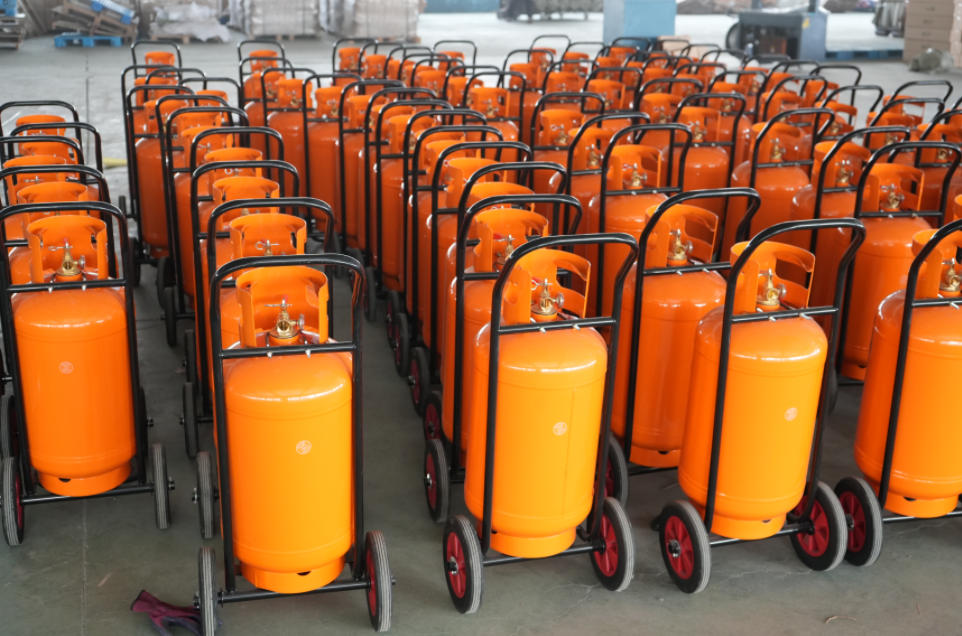
In vast factory floors, portable extinguishers proved limited in effectiveness and sustained firefighting capability. Consequently, cart-mounted extinguishers (25kg–50kg) and custom-specification units gradually entered production facilities, enabling workers to rapidly cover large-scale fires.
3.From Manual Operation to Intelligent Interconnection
In recent years, industrial fire extinguishers have increasingly integrated with fire detection systems to form “smart fire extinguishers.” These devices automatically monitor temperature, smoke, and even arc signals, triggering automatic activation at the earliest stages of a fire, significantly enhancing response speed.
III. Typical Industrial Scenarios and Fire Extinguisher Configurations
Industrial fire extinguisher configurations are no longer a one-size-fits-all approach but are determined by the environment. They require targeted configuration based on the fire characteristics specific to the production scenario.
Chemical Plants: Must cover flammable liquid and gas fires; dry powder + CO₂ is a common combination. For enclosed warehouses, clean agent systems may be integrated.
Power & New Energy Industries: High risk of electrical fires necessitates insulating, residue-free extinguishing agents like CO₂ or Novec 1230. Battery energy storage systems require specialized thermal runaway suppression solutions, such as lithium battery-specific extinguishers or systems.
Metallurgy and Metal Processing: Magnesium, aluminum, and other metals burn at extremely high temperatures. Specialized metal extinguishers (NaCl or graphite powder) are mandatory; any water-based agent risks triggering explosions.
High-Tech Manufacturing: Semiconductor and pharmaceutical facilities demand ultra-clean environments, making clean gas extinguishers nearly the only viable option.
In essence, the core principle of industrial fire suppression is: fire type dictates technology selection.

IV. Future Trends: Evolutionary Pathways for Industrial Fire Extinguishers
1. New Energy Fire Protection: With the growth of electric vehicles and energy storage facilities, lithium-ion battery fires present emerging challenges. Aerosol and fine water mist technologies are increasingly deployed in battery compartments and cabinets.
2. Intelligence and Automation: Industrial extinguishers may integrate deeply with IoT systems, enabling remote monitoring and automatic triggering to overcome delays in manual response.
3. Eco-Friendly Extinguishing Agents: Traditional fluorinated agents are being phased out, with environmentally compliant alternatives like Novec 1230 aligning with global standards.
4. Modularization and Integration: Industrial extinguishers may evolve beyond standalone devices, embedding as “modules” within production lines or energy storage cabinets to become integral to operational safety.
Industrial fire extinguishers transcend mere firefighting equipment to become safety technology solutions tightly integrated with industrial production. Their value lies in:
- Precisely addressing diverse industrial risks;
- Aligning with corporate needs across compliance, customization, and supply chain dimensions;
- Continuously adapting to new challenges in renewable energy and smart manufacturing through technological evolution.
For enterprise users, selecting industrial fire extinguishers requires moving beyond a “buying equipment” mindset and viewing them as integral components of production safety systems. Only by partnering with compliant manufacturers possessing R&D capabilities and supply chain assurance can fire risks be effectively controlled at their source.
FAQ: Frequently Asked Questions
Q1: What distinguishes industrial fire extinguishers from standard ones?
Key differences lie in application scenarios and extinguishing agent types. Industrial extinguishers prioritize coverage of specialized risks (e.g., metal dust, oils, electrical equipment) and commonly feature large-capacity or cartridge-style designs.
Q2: Can dry powder extinguishers be used for all industrial fires?
No. While versatile, dry powder is unsuitable for precision electronics factories or metal dust environments, where it may cause secondary damage.
Q3: How often should factories inspect fire extinguishers?
Visual inspections are generally recommended monthly, with weight or pressure checks every six months and comprehensive maintenance annually. Specialized industries like chemical plants should increase inspection frequency.
Q4: Will dry powder fire extinguishers be phased out in the future?
They won't be completely phased out, but in high-end manufacturing and industries with stringent environmental requirements, dry powder will gradually be replaced by clean agent fire extinguishers.
Q5: Is specialized training required to operate industrial fire extinguishers?
Yes. Especially when dealing with metal fires or gas fires, training is essential to understand the specific application ranges and operating procedures for different extinguishers.


Contact Us
If you have any questions about this Privacy Policy or our practices, please contact us:
Mobile: +86 13975129722
Email: robin@hongdunfire.com
Address: Room 29005, Wanda Building A, Changsha, Hunan, China
Related News
How to Distinguish Manufacturing Defects from Improper Valve Handling
Learn how to identify the real causes of fire extinguisher cylinder neck thread damage. Discover the differences between manufacturing defects, machining issues, transportation factors, and improper valve installation or removal. Includes expert insp

EN3-Certified Fire Extinguishers: Safety Assurance and Technical Analysis Under European Standards
EN3-certified fire extinguishers are at the core of European fire safety standards. This article details the standard system, performance requirements, applicable scenarios, and market value, helping to ensure safety and compliance.

What is the optimal size for a vehicle fire extinguisher?
This article primarily highlights the importance of vehicle fire extinguishers and provides size recommendations for different vehicle models, helping readers better select the appropriate size of car fire extinguisher.

Gas Fire Extinguishers Explained: Principles, Types, and Application Scenarios
Gas fire extinguishers play a key role in data centers, laboratories, power facilities, and other scenarios. This article explains their principles, types, application cases, and selection recommendations.