
Auto Fire Extinguishers: Unattended Protection When Seconds Count
Fires break out suddenly and spread quickly, causing significant damage without human intervention.Standard portable fire extinguishers require manual operation, leaving unattended spaces or equipment unprotected. Automatic fire extinguishers (also known as self-trigger or self-activating fire extinguishers) fill this gap and provide a crucial safety measure. They automatically extinguish fires the moment they are detected, potentially stopping them before they occur and minimizing or preventing further damage.
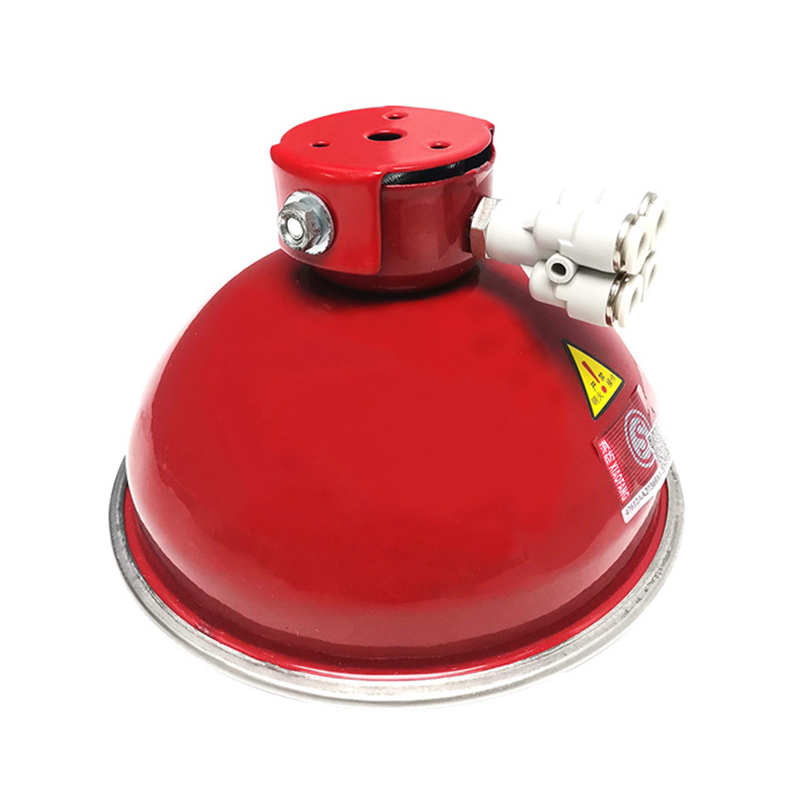
What is an automatic fire extinguisher?
An automatic fire extinguisher is a self-contained device designed to detect fires in its immediate vicinity and automatically release extinguishing agent without human intervention. It is a standalone fire suppression system for localized fire hazards.
Core Components and Working Principles
Detection: Fire extinguishers have a built-in detection mechanism, most commonly a temperature-sensing element. This is typically a glass bulb or fusible link designed to rupture or melt at a specific temperature (e.g., 79°C / 174°F, 93°C / 200°F, or even higher, depending on the application).
Activation: When the ambient temperature rises rapidly or reaches the rated temperature of the component, the component fails. This triggers the release mechanism.
Discharge: Detection of component failure directly or indirectly releases a pressurized striker or valve. This allows the extinguishing agent stored in the cylinder to be forcefully discharged through a nozzle or diffuser.
Extinguishing: The discharged extinguishing agent floods the protected confined space or the area surrounding the hazard, extinguishing the flames primarily through cooling and/or suffocation.
Automatic fire extinguishers excel in protecting enclosed or semi-enclosed spaces where fires can develop quietly and escalate rapidly, and where continuous personnel presence is unavailable:
Vehicle Engine and Equipment Compartments: Cars, trucks, RVs, boats, and heavy machinery. Electrical failures, fuel leaks, or overheated components can ignite engine compartment fires. Automatic fire extinguishers mounted directly in the compartment provide immediate fire suppression.
Industrial Machinery: Generators, compressors, CNC machine tools, and transformers. Overheated bearings, hydraulic fluid leaks, or electrical problems pose a significant fire risk. Commercial Kitchen Hoods and Ducts (Supplementary): While fixed kitchen fire suppression systems protect the cooktop and hood housing, automatic fire extinguishers can be installed inside the exhaust duct to extinguish grease fires that spread beyond the hood system. (Note: These are not a replacement for the primary hood fire suppression system.)
Electrical Cabinets and Control Cabinets: Server cabinets, switchgear, PLC control cabinets, battery storage cabinets. Electrical fires caused by short circuits, overloads, or component failures can start and spread in these enclosed spaces.
Process Equipment: Ovens, furnaces, paint booths, dust collection systems. Areas where hot or flammable materials are present.
Residential Applications: Increasingly used in home electrical distribution boxes, garages near boilers/water heaters, or behind high-risk appliances (although less common than in commercial/vehicle applications).
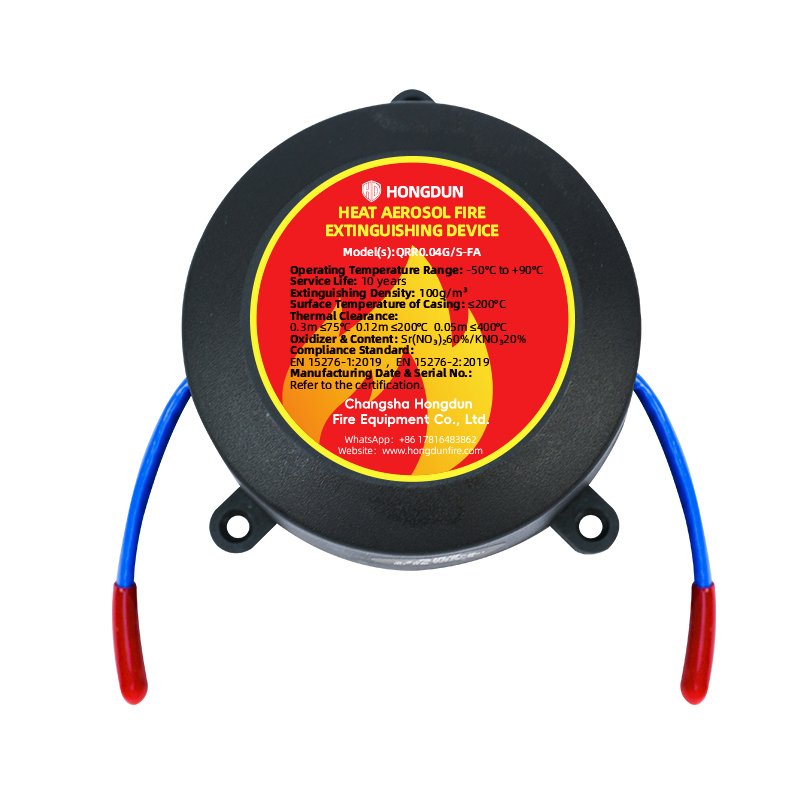
Types of extinguishing agents used in automatic fire extinguishers
The choice of extinguishing agent depends on the fire hazard and space being protected:
General-purpose dry powder (ABC powder/monoammonium phosphate):
Advantages: Effective against Class A (solid combustibles), Class B (liquid combustibles), Class C (gas combustibles), and electrical fires. Leaves a residue but is generally less corrosive than older BC powders. Common and economical.
Disadvantages: Can obstruct vision, requires cleaning up, and may cause minor long-term corrosion to electronic equipment if not cleaned up promptly. Not suitable for delicate electronic equipment.
BC powder (sodium bicarbonate/potassium bicarbonate):
Advantages: Very effective against flammable liquid (Class B) and electrical fires. Extinguishes liquid fires faster than ABC powder. Leaves less residue than ABC powder.
Disadvantages: Primarily used for Class B and C fires, less effective against deep-seated Class A fires. Residue still requires cleaning up. Not suitable for delicate electronic equipment.
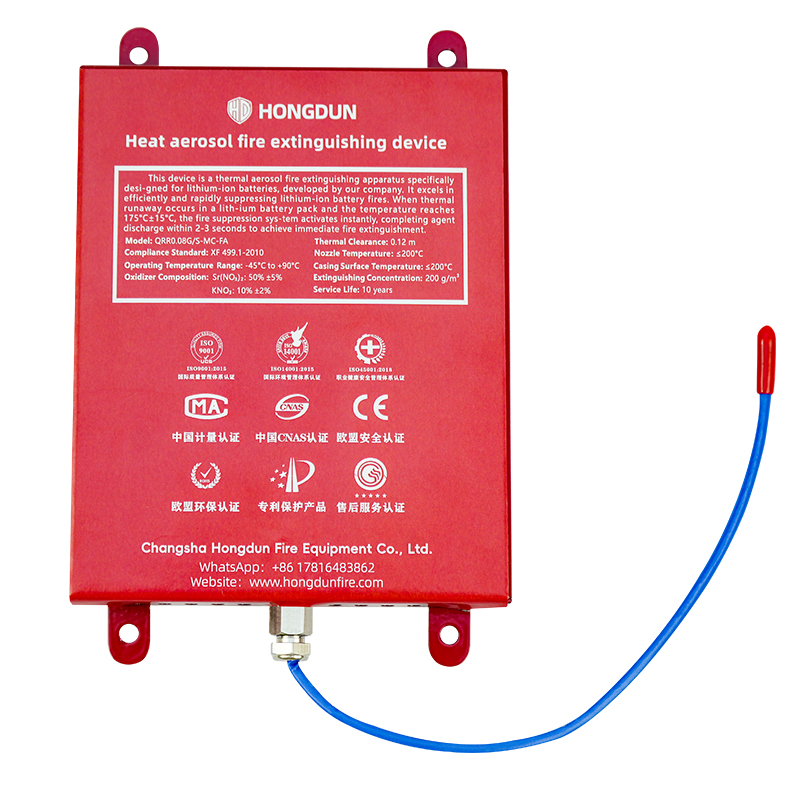
Aerosol:
Advantages: Extremely effective against Class A, B, and C fires, and electrical fires. Deployed as a fine, rapidly expanding aerosol mist, it suppresses flames chemically. It leaves minimal residue (a light dust layer), is non-corrosive, non-conductive, and non-ozone depleting. It's well-suited for delicate electronic equipment.
Disadvantages: Typically has a higher initial cost than dry powder. If sprayed in occupied spaces, the aerosol cloud can be temporarily unpleasant (despite being designed for use in unoccupied areas).
Advantages of Automatic Fire Extinguishers:
Instant Response: Fire suppression begins within seconds of detection, crucial for preventing the spread of fire.
24/7 Protection: Continuous operation, even when the facility is unmanned.
Local Fire Extinguishment: Directly targets the source of the fire, minimizing collateral damage from the extinguishing agent or water.
Easy Installation: Can typically be mounted directly in hazardous areas (e.g., engine compartments, cabinets) using a bracket.
Cost-Effective Safety: More economical than complex fixed fire suppression systems, it provides critical protection in specific high-risk areas.
Reduced Risk to Personnel: No personnel are required to be present and operate a fire extinguisher. Limitations and Important Notes
Local Coverage: Protects only a small area around the extinguisher (typically 1-3 cubic meters/foot, depending on model and agent). Not suitable for large open spaces.
Detection Trigger: Relies solely on temperature detection. May not react quickly enough to smoldering fires or fires starting far from the device. Not a smoke detector.
Single-Use: Releases the entire agent upon activation. Must be replaced after use.
Maintenance: Requires regular visual inspection for physical damage, corrosion, and to ensure the integrity of the detection element. Replace at the manufacturer's specified interval (typically 5-10 years).
Not a Replacement: Does not replace primary fire safety measures such as fixed fire suppression systems (in kitchens), smoke alarms, fire alarms, or portable fire extinguishers for personnel use. It is intended as supplemental protection for specific, high-risk, localized hazards.
Key Questions Answered
If an automatic fire extinguisher is installed, is a conventional fire extinguisher still required?
Absolutely. Automatic fire extinguishers protect specific, unattended hazards. Standard portable fire extinguishers are essential for personnel to fight developing fires in accessible areas. They have different purposes.
Can it trigger accidentally?
A properly installed and maintained device is very reliable. The temperature-sensing element is designed to activate only when its specific rated temperature is reached. Avoid installing it where it could be exposed to extreme ambient heat unrelated to fire hazards (such as directly on the exhaust manifold).
What is its service life?
The fire extinguisher unit itself typically has a service life of 5-10 years (check the manufacturer's instructions). The pressurized agent should remain effective for this period, as long as it is not damaged. It must be replaced immediately after exceeding its service life or after use.
Is it suitable for home kitchens?
It is technically possible, but not as common as commercial hood systems or portable Class K fire extinguishers. Installing an automatic device inside a home oven hood duct is a possibility, but consulting a professional is recommended. A portable Class K or Class ABC (kitchen-suitable) fire extinguisher is primarily needed in home kitchens.
Where is the best installation location in a car?
Securely mount it in the engine compartment, near high-risk areas such as the fuel injection system or electrical center, following the manufacturer's installation instructions. Avoid contact with moving parts or extreme heat during normal operation.
Automatic fire extinguishers are a critical component in protecting fire safety in unattended, high-risk, confined spaces where fires can quietly develop and spread. By providing instantaneous, automatic extinguishing of fires directly at the source, they offer a powerful defense against engine fires, electrical cabinet fires, and other localized hazards, potentially saving vehicles, equipment, and property. While they are not a replacement for a comprehensive fire safety plan, smoke alarms, or portable fire extinguishers, they fill a crucial gap. Carefully selecting the appropriate type (agent) and specification for the specific hazard, ensuring proper installation, and adhering to a maintenance schedule are key to effectively realizing their potential to save lives and assets.


Contact Us
If you have any questions about this Privacy Policy or our practices, please contact us:
Mobile: +86 13975129722
Email: robin@hongdunfire.com
Address: Room 29005, Wanda Building A, Changsha, Hunan, China
Related News
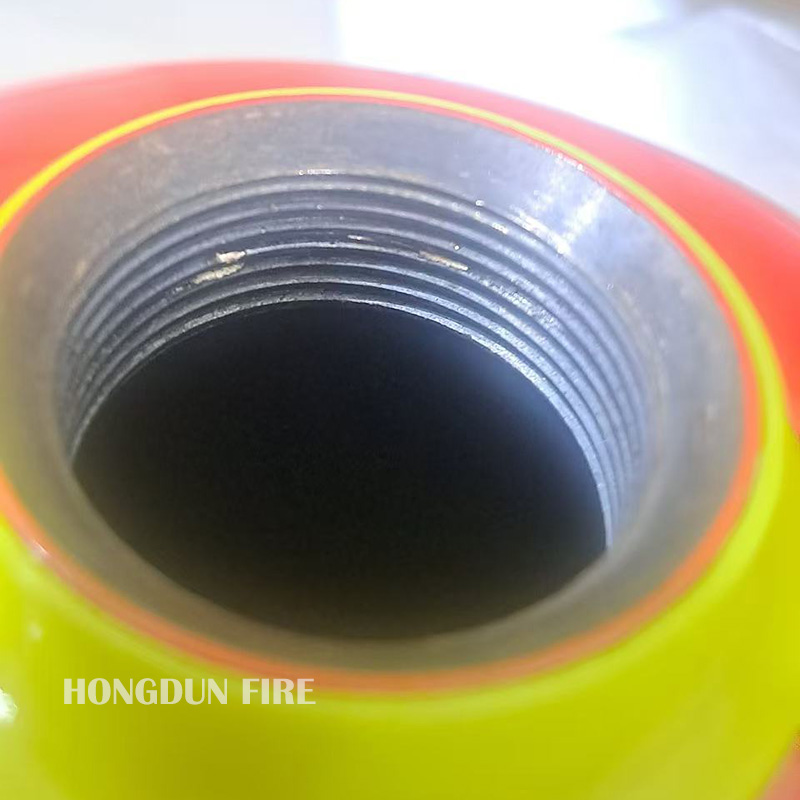
How to Distinguish Manufacturing Defects from Improper Valve Handling
Learn how to identify the real causes of fire extinguisher cylinder neck thread damage. Discover the differences between manufacturing defects, machining issues, transportation factors, and improper valve installation or removal. Includes expert insp

EN3-Certified Fire Extinguishers: Safety Assurance and Technical Analysis Under European Standards
EN3-certified fire extinguishers are at the core of European fire safety standards. This article details the standard system, performance requirements, applicable scenarios, and market value, helping to ensure safety and compliance.

What is the optimal size for a vehicle fire extinguisher?
This article primarily highlights the importance of vehicle fire extinguishers and provides size recommendations for different vehicle models, helping readers better select the appropriate size of car fire extinguisher.

Gas Fire Extinguishers Explained: Principles, Types, and Application Scenarios
Gas fire extinguishers play a key role in data centers, laboratories, power facilities, and other scenarios. This article explains their principles, types, application cases, and selection recommendations.